Photo Location Finder for Pros: Verify Images & Map Travels
Are you a journalist verifying a source image, an investigator gathering critical evidence, or a travel blogger mapping your global adventures? In a world saturated with digital images, knowing the precise location of a photo is more important than ever. For professionals, this isn't just a curiosity—it's a requirement for accuracy, credibility, and compelling storytelling.
This guide explores how professionals can leverage advanced geolocation tools to achieve their goals. We will cover how modern AI technology moves beyond simple data to deliver insights you can trust. Discover how to authenticate images, track movements, and enrich your visual narratives with unparalleled transparency. You can start right away with a powerful photo location tool designed for these exact challenges.
Professional Photo Verification & Geolocation Foundations
For professional use, finding a photo's location requires more than just a guess. It demands a high degree of certainty and a process that can withstand scrutiny. This is where specialized tools become essential, offering capabilities that go far beyond what's available to the average user. The foundation of professional geolocation rests on two pillars: advanced analysis and verifiable trust.
Beyond EXIF: Why AI Powers Pro-Level Analysis
Many photographers know EXIF (Exchangeable Image File Format) data. This metadata includes GPS coordinates, camera models, and timestamps. While EXIF data has its uses, professionals should not rely on it exclusively. This information often goes missing, gets removed for privacy reasons, or can be easily altered.
This is why Artificial Intelligence (AI) is a game-changer. An advanced AI image search can analyze the visual content of the photo itself. It identifies key clues that a human might miss, such as:
- Architectural Styles: Recognizing that a building is in the Gothic Revival style common in a specific European region.
- Unique Landmarks: Identifying not just the Eiffel Tower, but a specific statue or fountain in a less-famous park.
- Vegetation and Terrain: Distinguishing between the flora of Northern California and the Mediterranean coast.
- Written Language: Detecting signs, posters, or license plates to narrow down the country or city.
By combining EXIF data extraction with powerful visual analysis, a professional picture location finder provides a much more robust and reliable result, even when GPS data is completely absent.
The Value of Transparent AI Reasoning for Trust
For a journalist or investigator, the answer "the photo was taken here" is not enough. The crucial follow-up question is always, "How do you know?" Trust is paramount, and a black-box algorithm that simply provides an answer is not sufficient for professional workflows.
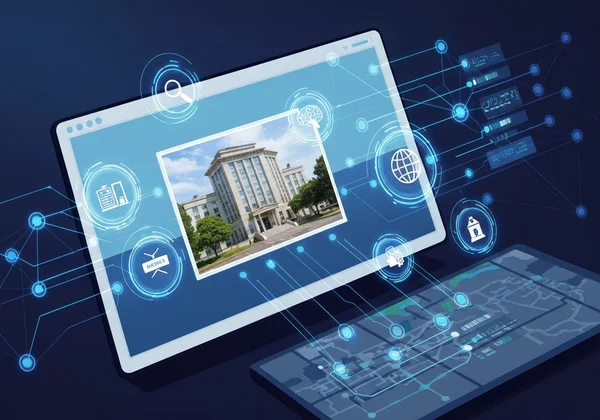
This is why transparent AI reasoning is so valuable. The best tools don't just give you a location; they show you their work. At Photo Location Finder, our system details the steps it took to reach its conclusion. You can see insights like:
- "EXIF GPS data extracted."
- "Visual scan identified the 'Golden Gate Bridge' with 98% confidence."
- "Architectural analysis suggests 'Victorian style' consistent with San Francisco."
This transparency allows you to evaluate the evidence yourself, building the confidence needed to publish a story, submit a report, or present findings. It transforms an AI from a magic box into a trustworthy assistant.
For Journalists & Investigators: Verifying Image Sources
In the age of misinformation, verifying the origin and context of an image is a core responsibility for journalists and investigators. An image can be a powerful piece of evidence or a dangerous tool for deception. A professional photo location finder is an essential instrument for separating fact from fiction.
Fact-Checking Visual Evidence & Image Origins
Imagine a protest photo appears on social media. It claims to be from a major city today. Before reporting, you must verify its authenticity. Is the photo recent? Is it from the location being claimed?
Using a tool to find the location from the picture allows you to quickly cross-reference the visual information. The AI might identify a building or landmark that proves the photo was actually taken in a different city years ago. This fact-checking process is critical for maintaining journalistic integrity and preventing the spread of false narratives. It provides a fast, data-driven first step in any verification workflow. To run your own check, you can find image location in seconds.
Gathering Digital Evidence with Geographic Precision
For private investigators, law enforcement, and legal professionals, a photograph can be a key piece of digital evidence. Establishing its geographic context adds significant weight to its credibility. For example, a photo provided as an alibi can be quickly confirmed or debunked by analyzing its location.
A precise geotag can place a subject at a specific scene, corroborate a witness statement, or map out a timeline of events. The ability to extract coordinates and present them on an interactive map makes the evidence clear and easy to understand. When the AI provides a high confidence score and transparent reasoning, that geographic data becomes a reliable component of your investigation.
For Travel Bloggers & Content Creators: Location Mapping
For travel bloggers, photographers, and social media influencers, a photo is more than just an image—it's a story. The location is a central character in that narrative. A powerful geolocation tool helps you manage your content, engage your audience, and even improve your online visibility.
Crafting Engaging Visual Travel Stories with Accurate Geotags
Have you ever returned from a trip with hundreds of photos and forgotten the exact location of a stunning waterfall or a charming café? A photo location finder can help you rediscover those spots instantly. By uploading your images, you can create an accurate map of your journey.
This allows you to build more engaging content. You can create interactive travel maps for your blog, share precise locations with your followers, and write more detailed, helpful guides. Accurate geotags add a layer of authenticity and professionalism to your work, transforming a simple travelogue into a rich, data-backed visual story.
Optimizing Geotags for SEO and Audience Discovery
Accurate location data isn't just for your audience; it's also for search engines. When you include specific geographic information in your blog posts, image alt-text, and metadata, you improve your content's Search Engine Optimization (SEO).
For example, a user searching for "best photo spots in Kyoto" is more likely to find your article if it contains precise geotags and location names. This helps you attract a highly relevant audience that is actively looking for the information you provide. Platforms like Pinterest and Instagram also use location data to recommend content, meaning accurate geotagging can increase your visibility and help new fans discover your work.
Maximizing Your Photo Location Finder Results
Using an AI-powered tool is simple, but a few strategies can help you achieve the highest level of accuracy and seamlessly integrate it into your professional life.
Best Practices for High-Accuracy Geolocation
To get the most precise results from any image location finder, follow these simple guidelines:
-
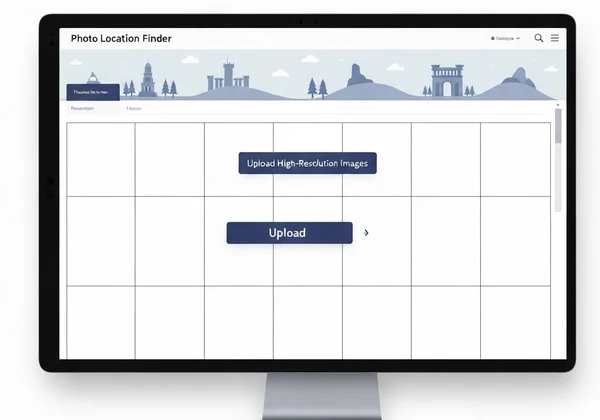
Use High-Resolution Images: The more detail the AI can see, the better. A clear, high-quality photo provides more visual data for analysis.
-
Prioritize Distinctive Features: Images with unique buildings, landmarks, natural formations, or signs are easier for the AI to pinpoint. A photo of a generic beach is harder to place than a beach with a famous pier.
-
Analyze Multiple Photos: If you have several photos from the same area, analyzing more than one can help confirm the location and increase your confidence in the result.
-
Review the AI's Reasoning: Pay attention to the confidence score and the visual elements the AI identified. Use this information to guide your own judgment.
Integrating Photo Location into Your Workflow
The key to leveraging any new technology is making it a natural part of your existing process.
- For Journalists: Make image geolocation a mandatory step in your pre-publication fact-checking checklist. Use the tool as soon as a source image is received.
- For Investigators: Use the tool to catalog and map all photographic evidence as it is collected. This creates an organized and geographically referenced case file from the start.
- For Content Creators: Set aside time after a trip to process your photos. Use the location finding tool to tag all your images before you start writing or editing your videos.
By making it a habit, you ensure that every piece of visual content you work with is backed by accurate and verifiable location data.
Empower Your Professional Work with Photo Location Finder
Why Photo Location Verification Matters Professionally
For journalists establishing truth, investigators gathering evidence, or creators inspiring wanderlust, photo location verification has become a critical professional skill. Traditional methods are no longer enough in a complex digital landscape. AI-powered tools provide the speed, accuracy, and transparency needed to meet professional standards.
Next Steps for Enhanced Accuracy
When you combine AI-powered visual analysis with transparent reporting, you transform location verification from a technical process into a professional advantage. The ability to find where a photo was taken is now an essential skill.
Are you ready to bring a new level of precision and trust to your work? Upload a photo today and see for yourself. Discover the story behind any image by using our free online tool.
Frequently Asked Questions About Professional Photo Geolocation
How accurate is AI in finding photo locations for professional use?
AI-powered geolocation tools can be remarkably accurate, often identifying locations down to the specific street corner. However, accuracy depends on the quality of the image and the distinctiveness of its content. Our tool provides a confidence score with each result, giving you a transparent measure of the AI's certainty, which is crucial for professional decision-making.
Can I verify a photo's location without EXIF data for an investigation?
Absolutely. This is one of the biggest advantages of AI analysis. While EXIF data is helpful, our tool specializes in analyzing the visual content of the image itself. It can identify landmarks, text, and other environmental clues to determine a location even when no metadata is present, making it ideal for investigative work.
How do journalists and investigators use photo location tools ethically?
Ethical use is paramount. Professionals use these tools to verify information and prevent the spread of misinformation, not to infringe on privacy. This involves focusing on images relevant to public interest events or investigations and respecting the privacy of individuals in non-newsworthy situations. The goal is to establish factual context responsibly.
How can travel bloggers use geotagging to improve their content's SEO?
When travel bloggers use a tool to find exact locations, they can embed those specific place names, neighborhoods, and even coordinates into their blog posts, image descriptions, and titles. This helps search engines like Google understand that their content is a highly relevant answer for users searching for information about that specific place, which can significantly boost search rankings and attract more readers. You can easily get image location data for all your travel photos.