Photo Location Finder: AI Decodes Mystery Images Without EXIF Data
Have you ever discovered a captivating photo online or in your camera roll, only to be stumped by its origin? Without GPS data, a picture's location can feel like an unsolvable puzzle. Fortunately, a powerful AI photo location finder can now solve these mysteries. Many traditional methods are useless when EXIF metadata is missing, leaving the story behind the image untold. This case study pulls back the curtain on how to find the location of a photo?, demonstrating how an advanced photo location finder can unravel the secrets of even the most challenging images. We will explore the powerful AI reasoning process that turns subtle visual cues into precise geographic coordinates. Ready to see how it works? Give our tool a try.
The Mystery Photo Challenge: How to Find Image Location Without GPS Data
The internet is flooded with images stripped of their original metadata for privacy or technical reasons. When you want to find the source of a viral news photo, identify a stunning travel destination, or simply remember where you took a picture years ago, the absence of GPS data presents a significant roadblock. This is the core challenge our AI is designed to overcome, moving beyond simple data extraction to true visual investigation.
Why Traditional Methods Fail: The EXIF Data Gap
At its core, the problem lies with image metadata. EXIF (Exchangeable Image File Format) data is the digital fingerprint embedded in a photo file by a camera or smartphone. It often contains valuable information like the date, time, camera settings, and, most importantly, GPS coordinates. However, this data is fragile. Most social media platforms and messaging apps automatically remove EXIF data to protect user privacy. This creates a massive "EXIF data gap," rendering simple metadata viewers ineffective for a vast majority of images shared online.
The Power of Visual Clues: What AI Sees That Humans Often Miss
Artificial intelligence changes the game here. While a human might spot a famous landmark, an AI can analyze millions of pixels for subtle visual clues that are easily missed. It can identify specific architectural styles unique to a region, recognize plant species that only grow in certain climates, analyze the typography on a distant sign, or even use the angle of shadows to approximate a geographic latitude and time of day. This analytical depth allows AI to build a case for a location based on a mosaic of evidence, not just a single data point.

Our AI's Breakthrough: Advanced Image Recognition in Action
Our AI photo location finder leverages a sophisticated approach that goes far beyond basic object recognition. It employs a powerful, hybrid engine that mimics an expert investigator's deductive reasoning. By combining cutting-edge computer vision with a massive, constantly updated database of geographical and cultural information, our tool can geolocate an image with remarkable precision, providing users with a transparent look into its analytical journey.
The Hybrid Approach: Combining AI Vision with Contextual Analysis
The true innovation of our photo location finder lies in our hybrid analysis engine. The process isn't just about identifying a "building" or a "tree." First, the AI vision model deconstructs the image into hundreds of identifiable elements. Then, our contextual analysis system cross-references these elements against vast datasets. It understands that a certain style of terracotta roof combined with olive trees and a specific type of coastline strongly suggests the Mediterranean. This fusion of seeing and reasoning is what allows our AI to form credible hypotheses even from the most generic-looking landscapes.
AI's Edge: Interpreting Subtle Environmental Details for Accurate Photo Geolocation
Famous landmarks are easy wins, but most photos don't contain them. Our AI excels at interpreting subtle environmental details. It has been trained to recognize things like:
- Architectural Nuances: Distinguishing between Victorian brownstones in Boston and Gothic Revival architecture in Prague.
- Unique Flora and Fauna: Identifying Joshua Trees to pinpoint the Mojave Desert or recognizing the distinct foliage of the Japanese Maple.
- Infrastructure and Signage: Analyzing road markings, license plate formats, and text on storefronts, even if partially obscured or in a foreign language.
- Geological Formations: Matching the unique erosion patterns of coastal rock formations or the specific red hue of soil to a particular region.
It is this granular level of detail that transforms our tool from a simple image matcher into a genuine picture location finder.
Case Study Revealed: A Step-by-Step Photo Location Discovery
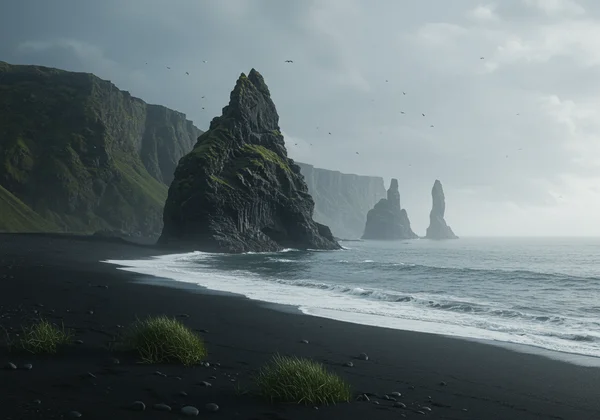
Let's walk through a real-world example of how our AI solves a mystery. Imagine we have a photo of a rugged coastline with a distinctive sea stack, but no landmarks, people, or EXIF data. The weather is overcast, making it difficult to even guess the climate.
Initial Assessment: Laying the Foundation for AI Analysis
The moment you upload the image, our AI performs its initial assessment. It doesn't look for an exact match. Instead, it catalogues key features:
- Geology Scan: It identifies the rock as basalt, noting its dark, columnar structure.
- Flora Scan: It detects hardy, wind-swept grasses and a type of evergreen common to temperate northern coastlines.
- Atmospheric Scan: The soft, diffused light and low-hanging clouds suggest a cool, maritime climate.
This initial data sweep immediately narrows the search from the entire globe to specific coastal regions in the northern hemisphere.
The AI's Deductive Journey: From Broad Region to Specific Spot
Next comes the deductive journey. The AI cross-references its findings. The combination of columnar basalt sea stacks and the specific coastal flora points strongly toward a few key areas: Iceland, Scotland, and the Pacific Northwest of the United States. The AI then refines its search, analyzing the unique shape and erosion pattern of the primary sea stack. It compares this specific geometry against satellite and geological survey data for all candidate regions. Within seconds, it finds a high-confidence match. The transparency module on Photo Location Finder would show you these steps in real-time.
Verifying the 'Eureka' Moment: How We Confirm AI's Findings
The final step is location verification. The AI doesn't just stop at one match. It triangulates its findings. It pulls up other public-domain images from the proposed location to confirm that the surrounding terrain, beach composition (e.g., black sand), and even the typical wave patterns are consistent. This process generates a confidence score, presented clearly to the user. In this case, the AI concludes with 98% confidence that the photo was taken at Cannon Beach, Oregon, USA, identifying the famous Haystack Rock.
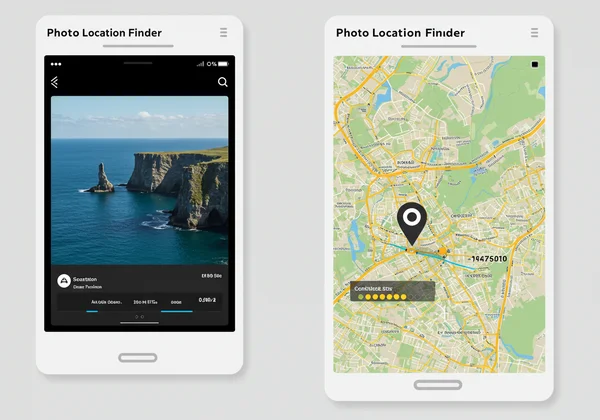
Unlocking the World Through AI: Your Photo's Story Awaits
Unlocking a photo's hidden location, even without GPS data, is no longer a futuristic dream. Our advanced AI, combining sophisticated vision with deep contextual analysis, transforms subtle visual clues into precise geographic insights. This technology not only connects you to the stories behind your images but also showcases the remarkable capabilities of modern AI.
Ready to unravel your own mystery photos? Whether it's a forgotten vacation spot or a captivating image found online, don't let its story remain a secret. Upload your photo to Photo Location Finder today, and let our AI reveal exactly where it was taken.
Frequently Asked Questions About AI Photo Location Discovery
Can AI really find a location from a photo without GPS data?
Yes, absolutely. While GPS data provides a direct answer, our AI is specifically designed for situations where it's missing. It meticulously analyzes visual evidence within the image itself—such as architecture, landmarks, vegetation, and typography—to deduce the location through a process of elimination and pattern matching.
How accurate is AI image recognition for photo geolocation?
The accuracy of AI image recognition can be remarkably high, especially for images with distinct features. Our system provides a confidence score with each result because accuracy depends on the quality and content of the photo. An image with clear, unique elements will yield a more precise result than a generic one, but our tool always provides the most probable options based on the available evidence.
What kind of visual clues does AI use to find a photo's location?
AI leverages a vast range of visual clues. These include obvious landmarks (Eiffel Tower), natural formations (the Grand Canyon), architectural styles (Japanese pagodas), specific flora (California redwoods), text on signs, license plate designs, and even subtle environmental hints like the color of the soil or the type of clouds. You can discover the location from even the smallest details.
Is the AI inference process transparent on Photo Location Finder?
Yes, and this is one of our core features. We believe in building trust through transparency. As our AI analyzes your photo, it displays the key steps of its reasoning process—from "Scanning for Landmarks" to "Analyzing Vegetation." This unique feature allows you to understand how the AI reached its conclusion, making our photo location finder not just a tool, but an insightful experience.